Sunday, 31 May 2015

Highway 55* Revisited


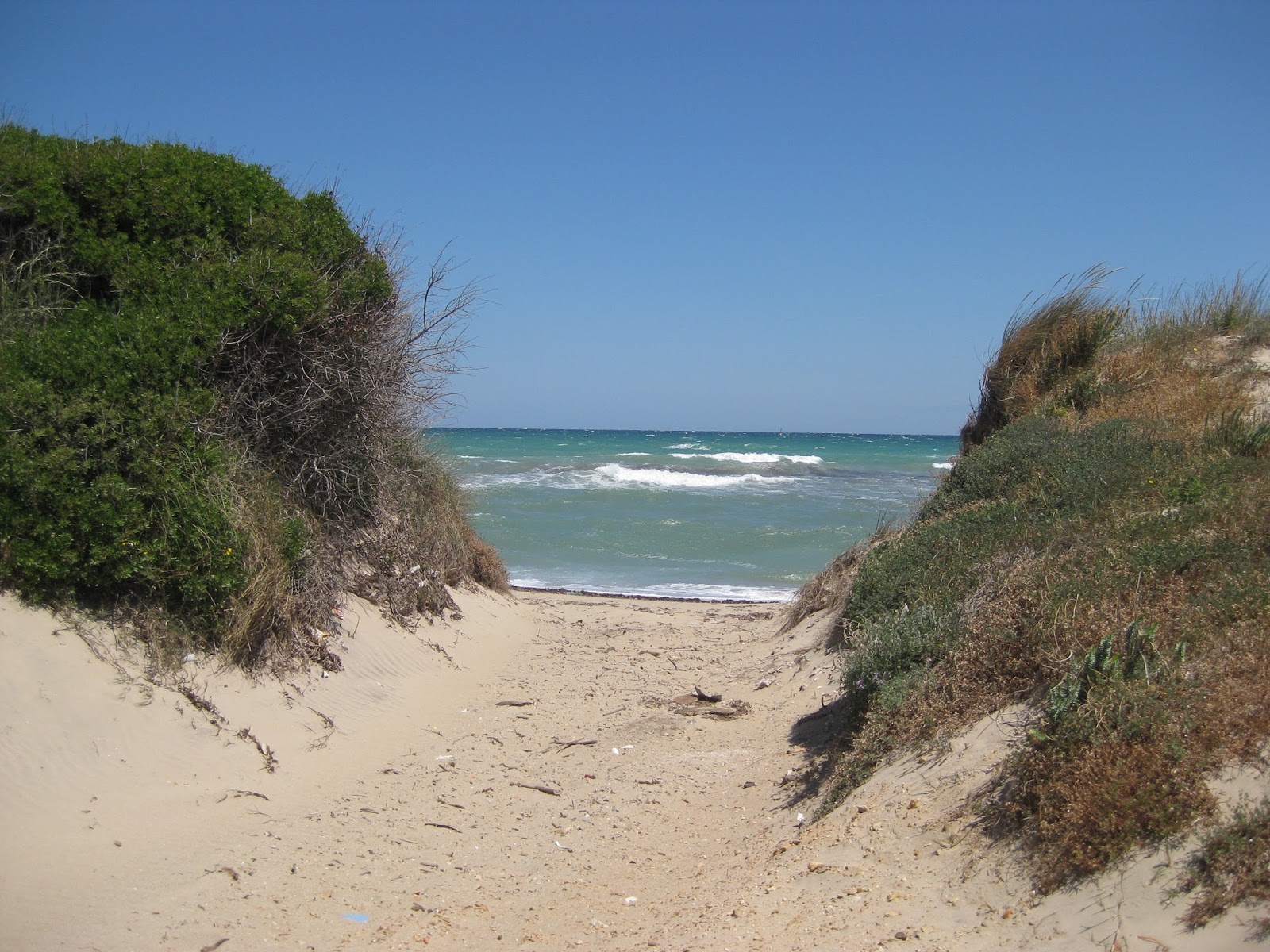
I first visited Puglia in the summer of 1969, during a final tour, backing a singer called Maurizio, in the death throes of what was left of Dave Anthony’s Moods.  We’d come there from the nightmare of the Calabria toe, where in small hilltowns the police patrolled at night in fours, with dogs, and black-clad young women hid their children behind their legs and their faces behind veils at the approach of this bunch of harmless would-be capelloni hippies, and you had to get Davide, the roadie, to persuade a suspicious café to sell you a horsemeat steak.

Puglia wasn’t a bit like that.  Enlightenment was the word I used to myself, back then, and it was a good one: the area was full of light, both literally and figuratively.  I remember a late night conversation with a university student in Lecce, in which he summed up the difference: “They are Arabs, we are Greeks”.  Politically incorrect nowadays, perhaps, and historically broad-brush – Puglia has been invaded more times, by more alien forces, than perhaps anywhere else in Europe, including Britain – but it nailed it at least at one level.
 
So my recent visit was more than just a holiday.  I wanted to discover whether my hazily-recalled impressions from forty-five years ago were still real – was it still the same?  Or rather, did it still feel the same?

Well, the short answer is “Yes”.  I’ll share a few details of the trip next time, but meanwhile here are a few pictures.


*The E55 is the coastal near-motorway (I haven’t been able to discover what the E stands for, as Italian roads are officially A, S, R or P) which runs from Bari in the north to Lecce in the south, and hence will be much travelled by any motorised visitor to Puglia.

Thursday, 14 May 2015

Getting Ready


I have a wimpish streak when it comes to getting on an aeroplane.*  I don’t do this very often nowadays, which makes it loom even more threateningly.  In a way, although the procedures are supposed to be much slicker nowadays, what with t’internet and that, I hanker after the good old days when you went up to Meadway Travel, sat down for a couple of hours with an expert called Jenny who did all the legwork and answered all your questions (including the ones you hadn’t thought of); and three days later a fat envelope dropped through the letterbox, you gave the contents a skim, read the bit which told you where and when to turn up and then forgot about it until departure day.  They supplied all the bits of paper which now you have to identify, download and (if you’re lucky and your version of Adobe is the same as theirs – possible but unlikely) print off.  And how is it that my question has never been Frequently Asked?

Anyway, all that’s sorted, so I’m distracting myself with details.  I went to Staples (you know, the wonderful shop where you buy your, erm, staples) for some luggage tags.  (They had a choice of colours, I chose white.)  I went to another wonderful shop called Clas Ohlson, which sells everything you can’t buy anywhere else, and got continental plug adapters, a two-way headphone splitter, and an alarm clock.  I added antihistamine cream and paracetamol to my packing list.  And a penknife.  Never travel without a penknife (in the hold, of course, not the carry-on): as I have noted before, it contains a corkscrew.  You have to be equipped for emergencies when travelling.  Grand Tourists used to have several trunks-full of just-in-case stuff sent luggage-in-advance.

I’m going to Puglia, just in case you wondered.   


*Multiply everything by ten when two aeroplanes (consecutive, not concurrent!) are involved.

Wednesday, 15 April 2015

Old Books


What do you do with old books?  I don’t mean the fly-by-night paperbacks I haul in periodically from Waterstone’s, read once and then recycle via the bookbank up at the tip.  (Or not, sometimes they get kept, reread and, rarely, find their way into the permanent library.)  No, I’m talking about really old books.

About sixty of them have been furnishing my dining room for twenty years or more, in a bookcase next to the fireplace.  They range from assorted Prayer books and semi-religious tracts (Foxe’s Book of Martyrs, anyone?), through an almost-complete set of Dickens reissues (Unwin editions, 1930s I’d guess), to worthy tomes like The Origin of Species, Macaulay’s Essays on English History, and The French Revolution by Thomas Carlyle.  Plus a fair smattering of Victorian verse anthologies, several Works of Shakespeare, and a possibly earlyish edition of Culpeper’s Complete Herbal.  They’re all fairly tatty, almost certainly financially worthless and, most importantly, with one or two exceptions have never been read by anyone still alive.

I’m getting rid of them because I don’t think books ought to furnish a room.  I’m going to go slightly metaphysical on you now.  Books have no intrinsic value.  Their only worth is in the thoughts they express.  In turn, this value is circumscribed by the quality of both the thoughts themselves and their expression in a particular book.  But above all, if I’m right here, that worth dissolves into nothingness unless the book gets read.  I’m not going to read any of these sixty or so books, and I can’t find a way of enabling or persuading anyone else to do so.  So in every sense, they’re worthless.  So they’re landfill.  Right?

And yet.  And yet, perhaps they do contain, at least some of them, an ineluctable value beyond the paper, the cardboard and the words within them, read or not.  I skim through the flyleafs (flyleaves?) and find inscriptions which seem to carry their own stories, ones that will never be told but just might still exist in a memory or an imagination.  Certainly in an imagination, in fact: I find myself creating their lives and relationships even as I transcribe them.

Poetical Works by Moore: “Caroline Matthias on her 13th birthday from her affectionate cousin J M Laws.  Jan 1861
The May-Flower by Harriet Beecher Stowe:  “R. A. Scammell.  A birthday gift from A.G.  Feb 10th 1882
The Poetical Works of William Collins  “Edward Geo. Browne  Presented to him on the 26th May 1834 by his friend and tutor J. Blern(?) Anstis(?) with the sincerest wishes for his welfare.  St Helier Jersey

And in one of the Shakespeares: “E L Rea ‘02”  That’s my grandfather.


Thursday, 9 April 2015

Caravan revisited, at last

As I hadn’t been able to go and shut down the caravan in the autumn, I'd entrusted the task to Joseph.  So I phoned him last week and left a message to make sure the various bits of plumbing would be on site for me to reinstall when I visited for the grand re-opening ceremony.  I’d planned an overnighter last Monday to do this, but this didn’t happen, mainly because of westerly gales, so there was a smidgeon of anxiety when we set out on Easter Saturday.

As it turned out, I needn’t have worried.  Good old Joseph had not only delivered the plumbing, he’d installed it too, almost certainly better than I’d have managed.  This man is a hero, as long as you keep on the right side of him.  I think I’ve written before about this – the caravan site is run as a benign, hands-off despotism, in which the rules often have to be uncovered by intuition rather than read from a lawbook.  Common sense usually prevails – for example, don’t fly kites, there are overhead power lines – but doesn’t necessarily suffice – always park across the slope, wheels turned uphill, because a car ran away and crashed into a van, about twenty years ago.

Bee had read a little item in the Telegraph (purely by chance, not her usual paper of choice) about standing stones in Mynydd Preseli, which was a good enough excuse to set off on Sunday to explore this wild piece of inland Pembrokeshire.  A quick map-skim revealed that the area is riddled with ancient monuments, including the birthplace of the Stonehenge bluestones, and sure enough we soon found Gors Fawr:


Not a hugely informative notice*, you’ll agree – if anyone knows the answer to the question, please do share it – and the stones themselves aren’t that impressive, but the setting more than makes up for that:


Our next find, however, after a fabulous fish’n’chip lunch in the garden of the Golden Lion pub at Newport, was the truly spectacular Pentre Ifan**:


It’s what remains of a prehistoric burial chamber, the covering earth having obviously long eroded away; but I couldn’t help imagining the delight of that ancient architect in achieving that exquisite tripodal balancing act.

Add in a re-(for me)-visit to one of my spiritual homes, Strumble Head:


All in all, a thoroughly rewarding day out.

Should've taken my shorts, though.

*You can find some more information, albeit mostly speculative, here.

**And here.


Friday, 3 April 2015

Dw i heb dy weld ti ers talwn!

Off to open up the caravan tomorrow, which will doubtless inspire me to resume blogging – SAD always sets in in March, and I need kickstarting, which a visit to West Wales usually achieves, especially when the weather is as good as promised.  I quite liked the Plaid Cymru lady in the debate, didn’t you?  And of course Nicola is a star.  What a shame they don’t want to be British.  If they were, I’d vote for one or other of them.

Meanwhile, a few Cameronisms which almost make you warm to him:
  • In the brilliant documentary about Parliament the other week, he informed us that the place was “half church, half museum, and half public school.”
  • At PMQ last week, he said “A straight answer deserves a straight question.”
  • And in yesterday’s debate, he informed us that “There are three sides to this coin.”

Iechyd da!

Wednesday, 18 March 2015

Strictly, for the Birds?

Apparently what we lack is an Official, Elected, Government-approved National Bird.  I agree: what could be more important?
Wikipedia suggests that we already have one,, the Robin, but he/she’s never won a popular vote or official recognition. Several of our candidates are already taken – Denmark has nicked the Mute Swan (don’t tell Her Maj), and Sweden the Blackbird.  But, looking more closely, that shouldn’t be a problem – Golden Eagles are everywhere!  Even in Scotland.
Which leads me to two related thoughts.  One, can’t we cast the net a bit wider?  Does the bird have to live here, or even exist?  After all, our national animals seem to be the Lion (not particularly indigenous) and the Unicorn (not yet detected). 
And secondly, shouldn't a National Bird in some way be reflective of national character?  (Out of respect for my American friends, I say nothing about the Bald Eagle’s feeding habits.)  Just looking at the state of the Kingdom as we near our defining General Election, I’m surprised that the Magpie and the Ring-necked Parakeet aren’t on the list.
So, here’s my considered candidate for Britain’s National Bird:


Friday, 13 March 2015

The Map Is Not The Territory


Or to put it in more dynamic terms, ‘The Route Is Not The Destination’.

The other day, I was thinking about tarting up the appearance of my blog, in a probably vain bid to attract my readership back into double figures.  So I went to the appropriate place in the dashboard thingie, did what I thought I might want to do, and got ‘Error bX-evmf18’.

Guessing I might need some help in interpreting this, I mailed the Help Forum.  Sure enough, a prompt reply from a friendly expert suggested, amongst other things, that I try doing it in Chrome rather than IE.  I always obey techies as a first resort, and yes, it worked!  (As it happens, I ended up not making any changes, but that’s not the point.)

As a follow-up, whilst saying thank you, I wondered why this should be – why should the same program work differently depending on the browser I use to access it?  I got the somewhat unhelpful reply “Internet Explorer, Chrome, Firefox, Safari, Opera...all of these browsers render information differently, which is why you're seeing different behavior in different browsers”, which is really just a kind of rephrasing of my question, isn’t it?  So the experts don’t know either.

This anecdote is trivial, no serious harm done.  But it’s by no means a unique instance of this sort of stuff, and I can’t help but worry a bit.   We hear about the forthcoming ‘Internet of Things’, whereby, within the blink of an evolutionary eyelid (see Moore’s Law), our washing machines will be telling us to change our socks, our driverless cars will be deciding whether to run over the stray dog or the pram, and our wheelie bins will scold us for dropping a plastic bottle in the wrong one ...  And I think: are they serious??

For an industry that, after decades, can’t even agree on a set of standards for how to take us to our chosen destination without rebuilding the destination (‘Open Systems’; what were they again?), to expect us to buy into this infinitely more complex, dangerous, untried, hackable guff is either recklessly naïve or threateningly sinister.


Anyway, that’s what I think.  And now you’ll have to excuse me, my socks have just told my freezer that my toenails need cutting, and offered me a pickle fork to do the job, and are now trying to walk my feet jauntily into the dishwasher.

Monday, 9 March 2015

Mothers Day


Next Sunday is Mother’s Day, right?  Well no, not according to my mother it isn’t.  It’s Mothering Sunday. 

For a progressive woman, she was remarkably traditional in some respects, this being just one of them.  She hated the term ‘Mother’s Day’, and I’ve obviously inherited some of her attitudes, because so do I; though for possibly different reasons.

My mother always said that, though change for the good was to be fought for, change for change’s sake was a bad thing.  Traditions have value, and shouldn’t be cast aside simply because they’re old.  I subscribe to that.  (Although I don’t entirely accept her secondary motive, which was that ‘Mother’s Day’ should be resisted because it was ‘American’.  She was irrationally against nearly all things American, at least in her later years.  The thinking, or emotion, behind that shift I’ll never know: after the War she had nothing but praise for America’s role in defeating Nazism, and Lend-Lease and the subsequent Marshall plan, without which, she rightly thought, Europe would have collapsed back into the same kind of chaotic vacuum as it did in the twenties and thirties.)

Anyway, to come back to the point: she was wrong about ‘Mothering Sunday’.  It was originally nothing to do with motherhood, but was invented to lure people back to their ‘mother church’, and only fairly recently became subsumed into a celebration of the role of a mother.  But that’s a quibble: what’s in a name?  What it stands for is what matters.

I do, when I notice or remember it, think of my mother on that day, but not exclusively then.   I think of her quite often, randomly and unexpectedly.  Everyone has a mother, and it’s a bit glib to compress one’s recognition of her into this one day a year, isn’t it?  I can imagine a mode of thought which says “Right, that’s her done for another year.”

That’s reprehensible, and that’s why I dropped the apostrophe in the title of this post.  Even better, shift it to the right: “Mothers’ Day”.  Let’s celebrate all mothers as well as our own – the deprived, starving, abused, unwitting, unwilling.  We all owe them our existence.

Saturday, 7 March 2015

Writing Is The Best Therapy


Back in the 1950s, the Reader’s Digest used to have a little feature called ‘Laughter Is The Best Medicine’, one of the many pearls of wisdom imparted by that amazing publication.

Today, I had cause to be angry with someone, so I composed an email, detailing the causes of my anger with ice-cold precision.  It took me about an hour to write.

I didn’t send it, of course, and nobody, including me, will ever read it.  But it did the trick.  By the time I pressed the ‘Don’t Save’ button, I was laughing, mainly at myself.

Monday, 2 March 2015

Let’s Double The BBC Licence Fee!


I’d quite enjoyed Julian Barnes’ novel ‘Arthur and George’ a few years ago, so I thought I’d give the ITV adaptation a go.  The story – about Sir Arthur Conan Doyle’s detective-like espousal of a lost cause in reaction both to bereavement and to Holmes’s unsupportable weight – is a fascinatingly disturbing one, and I like Martin Clunes a lot.

Well, I watched for twenty minutes (forcing myself to ignore the persistent, obtrusive, irrelevant background music and cupping my ears to try and catch, beneath the tinkling pianos and droning cellos, what the actors were actually saying).  I did quite well, and was getting quite drawn in to the story (although flashbacks to Wolf Hall and how to do it properly kept intruding), when the story went blank and (I think) four minutes of very loud adverts asserted themselves.

I say that, but to be honest I can’t be sure about the loudness or the duration of the adverts.  I went and did a bit of dishwasher loading, came back and undid the mute button, and watched a bit more.  Even more dialogue-drowning, subtlety- bludgeoning foreground music; and then, after another twenty minutes – well, you know the rest.  I switched off at ad break #3, and won’t be watching next week’s episode; which is a great shame, because I’m sure there was a pretty good drama lurking somewhere behind the crud.

When will they ever learn?  Extended drama (with or without the music!  That’s another rant, really) requires extended attention.  Just go to the cinema or, even better, the theatre to prove this.  If the only way to fund quality television is to slice it up and dump dollops of gunk into the interstices, I’d rather do without it. 

To put it another way – Advertising Is Evil! 

Thursday, 12 February 2015

Pinkness


There’s a lot of it around in Labour at the moment, isn’t there?*  The backdrop to Ed’s speech on the news today was pure carnation, and his tie matched it.  And of course there’s that “magenta” (pink) ‘Woman to Woman’ van, which has come in for a certain amount of derision.**

But what choices did the poor Labour spinners have?  Red was obviously out, as were blue, yellow, purple and green.  White would be invisible; besides, you only have to think about a white van at campaign HQ these days to get you the sack. 

A little lateral thinking would have helped.  I’ve done that, and I have the answer.  A white van with a big Red Cross painted over each side (the slogan artfully inserted in the blank spaces).  Think about it – it ticks boxes.  It sends subliminal messages about healthcare and humanitarianism, issues many women feel deeply about.  It could reassure potential Ukip defectors.***  And most importantly, mix the two colours together and you get a lovely girlie pink.

Just trying to help.


* Leaving politics aside, of course.

**Much of it from those whose own vans, not that long ago, were driving around flaunting a message saying ‘Don’t look too foreign, or we’ll get you and send you back somewhere nasty’, or something.

*** Not that many of those are women, I suspect.

Monday, 9 February 2015

What’s Funny?


The conversation had got round, as it so often does, to the best-ever British sitcoms; ‘Gavin and Stacey’, ‘Only Fools and Horses’, ‘Porridge’, all the usual suspects.  And so, naturally, on to the best comics (British too, these people don’t do American).  Again, no surprises – Morecombe and Wise, Tommy Cooper, Les Dawson, Ken Dodd …  They’d been to see Ken at one of his three-hour standupatons a few years ago: “And not a single swearword!”  They all agreed that swearing and comedy never mix: “Completely unnecessary.   Uncalled for.  Offensive.”  Yadayadayada.

I silently slightly disagreed.  I can think of several brilliant jokes which just wouldn’t work without the judiciously placed swearword.  (Alexei Sayle’s story of the two bee-keepers, for one.)  I couldn’t tell them (the jokes or the people), of course, but it did set me thinking.  What is it that makes us laugh?

I realise that I blogged about the philosophical underpinnings of this question a few posts ago, so I’m not going to go there again.  (I hear the relieved ‘phew’s and the unclenching of grinding teeth.)  But I still want to know.  I laugh at Buster Keaton but not at Charlie Chaplin, whereas you might do the opposite, so funniness isn’t an objective attribute.  In fact, I can find something or someone hilarious one day, and just irritating the next, so it’s not even to do with me or my relationship with the funnything, at least not in any durable sense.  It seems to be something independent, out there in its own right, like a draught.

Sorry, I said I wasn’t going to go there, and then went.  But I least I managed to stop myself before I got on to neuroplasticity.

Monday, 2 February 2015

Follow the money …!


… and overtake it!

(Haven’t had a good rant for yonks.)

  1. ‘They’ tell us ‘we’ can’t beat the global corporations because ‘they’ have the best analysts, lawyers etc.  So let’s buy those analysts and lawyers and pay them over the market rate and set them to work for ‘us’ rather than ‘them’.  Whatever they offer, offer ten per cent more.  Grab them by the wallet, their hearts and minds will follow.
  2. How to pay for that?  Easy. Step one: confiscate their untaxed hidden assets.  Obama has just made a stumble in this right direction.  If necessary, invade the Bahamas, Monaco and Jersey.
  3. The highly lucrative British arms industry pleads that mass unemployment would result from curtailing their activities.  Fine.  So let them carry on selling death and destruction to the highest bidder, but make them pay the true cost.  I don’t know how to value a human life, but let’s say $50,000?  And $100 per square metre of property?  Whatever.  But let’s make BaE and the rest submit their accounts, balance the true books and offset the true costs.  Not to mention the roads, the streetlights, the prisons, the hospital beds: I won’t go on.
  4. Similarly, ask every hedge fund, private equity company and property investor to describe exactly what is their product.  That means: something you or I could go and buy from them.  If they can’t, tax them into destruction.
  5. I realise that none of the above is going to happen, because difficulty always trumps achievability.  Perhaps we can crowdsource?  I’d dib in a K.  But we’ll need to create a Citizens’ Dictatorship first.  There’s an idea – the CD Party?  Probably too late.

Friday, 30 January 2015

Is Anything There?


Should I feel sorry for my brand-new tumble dryer?

Or my ageing car?  Or my neglected, very old lawnmower?  Or even that ancient TV I threw out without a second thought when my freshly born new one arrived last October?  What about that trusty Nokia phone I blamed for losing itself and forcing me to buy an iPhone I didn’t really want, a classic case of guilt transference if there ever was one?  Do they care?

Philosophers talk of little else at the moment – what exactly is consciousness?   Tom Stoppard, ahead of the curve as always, has written a play about it.  Some posit that as we can’t define our own, it’s impossible to be sure whether it really exists, or if it does, where its boundaries lie.  Is it likely that it can be restricted to this single biological construct we call a human being, or even to other sentient, mobile chunks of carbon and water and trace elements?  Can we be sure that our machines, made of the same chemical basics, aren’t in their own way conscious?  These ‘things’ certainly possess their own sensory apparatus, languages, nervous systems, all the attributes we assign to ourselves to prove our unique superiority.  Maybe everything is conscious in its own way.  Or maybe there’s no such thing.

Bishop George Berkeley proposed that solipsism is irrefutable, and Sam Johnson refuted him by kicking a stone – but Einstein, Heisenberg and Schrödinger's cat hadn’t even been born then.  More recently, Descartes thought that thought defined consciousness, but that kind of begs the question, doesn’t it?  Bertrand Russell and his buddies boiled it down to pure mathematics, which exists regardless of whether conscious creatures work it out or write it down – which means either the whole universe must be conscious, or nothing is.  Which doesn’t get us a whole lot further.

If there’s a single thing that demonstrates consciousness, I suggest: a sense of humour.  My car (especially its satnav) certainly has one, so did my dog.  My apple tree is cheekily poking its little buds out as I write.  On the other hand, I could name some humans who, by this test, probably aren’t conscious.  (Don’t worry, you can vote them out in May.)

A tumble dryer writes: I have 12 programmes, and you’ve only used two of them.  You don’t care about me, do you?

I reply: You might think that; I couldn’t possibly say.

Friday, 23 January 2015

More Days in a Life


Ages ago, I wrote this, and through some quirk of consciousness (see tomorrow’s post, maybe) the idea jumped out at me again, from wherever ideas lurk.  So here are five more.


It Won’t Be Long. Almost any of Lennon’s songs on ‘With the Beatles’ or ‘Hard Day’s Night’ would do for this slot.  I was a wannabe songwriter bound tightly by the musical conventions of the previous fifty years. Lennon threw a disdainful pot of musical paint at all that: wrong chords, missed or truncated bars, irony-laden Glenn Miller quotes harshly, gleefully out of context …  I wrote dozens of pastiche imitations –  all thankfully lost, but I’ll never forget the exhilaration of discovering that A major to F# major and then back to A, or B flat, or wherever, was okay: rules could be broken.  This discovery soaked through from mere music to real life over those few churning years.


Rain.  I’m basking in the garden of 17 Hutchings Walk, one weekday afternoon in June 1966, early in that coruscating summer.  I’m not at all focussed on music, my mind and my body are elsewhere entirely, wafting around various situations and one particular girl.  But then this sound drifts through the French windows, and sucks me indoors. Somebody’s got the new Beatles single, and has put the B side on first.  Something opens.


And Your Bird Can Sing.  We’d done our usual set at the Piper in Milan, and I’d struck up a conversation with the Indonesian lead guitarist of the new all-girl support band, the Honeys.  She had a genuine Gibson Les Paul, which meant I was in love with her.  We sat knee to knee while she proved to me that the jangly two-line guitar part could be played at one go, not double-tracked, if you were good enough, which she was.  Complications grew from nowhere over the next few stretched-out weeks.  She had a husband and a child back in Holland, it seemed.  In the end she fled the country.  I don’t think it was because of me, but I’ll never know, will I?  I wish I could remember her name.


Hey Jude.  This one is a sitcom moment.  Andy walks in to the pensione with a 45 in his hand.  “Rubbish new Beatles record,” he announces.  Maybe he’d only heard the B side.


I Just Don’t Understand.  Lastly, a teaser.  This was never a ‘proper’ Beatles track: it’s on the Live at the BBC compilation, recorded for Pop Go The Beatles in July 1963.  I’ve included it because I love the song (original 1961 record by Ann Margret, you can find it on YouTube), love John’s performance of it, and love how it reminds me precisely what it was like to be a teenager in love.

Tuesday, 13 January 2015

So why does it sound better?

There’s nothing like quantum physics for getting you off to sleep.  Following on from last week’s post about vinyl, I was musing on the parallel – in the twenties, until cleverclogs like Schrodinger and Dirac came along, theoretical physicists agonised over whether light was a wave or a particle.  (On Monday, Wednesday and Friday it was a wave, on Tuesday, Thursday and Saturday, a particle.  On Sunday, they prayed.)

There’s never been any doubt, though, that sound is a wave.  Until thirty-five or so years ago, it stayed that way.  A bang on a drum, a pluck on a guitar, would be carried through the air to a microphone and thence to fluctuations on a magnetic tape, pushed through a few bits of technology and carved into a squiggly groove on a vinyl LP; then reverse-pushed though some more technology into a speaker which would turn it back into the sound wave it started out as, or as near as possible.  A wave, however, all the way.  The technical term for this is ‘analogue’.

Then some bright spark worked out that they could turn this analogue wave into particles, or binary digits, by snatching tiny bits of it as it entered their domain, and within a few years analogue recording was old hat, and all sound waves ended up as sampled particles.  Of course, at this stage they still had to be converted back into waves so that they could be etched onto a vinyl platter; but then the compact disc came along and even this transition wasn’t necessary.

Because the CD rapidly (and in some ways rightly) commercially forced out the cumbersome old fragile LP, it then became necessary to convert old analogue records into a digital format so that they could become CDs.  This was called ‘remastering’, a blatant euphemism if ever there was one.  And now it’s become smart to convert them back again, so that they can be resold as fashionable vinyl LPs.  (I was almost going to say ‘groovy.’)

All these transitions end up in the same place: sound waves going into your ears.  As a writer to today’s Guardian rightly observed, nobody has ever listened to digital music.

So the answer to the title question is: it doesn’t, necessarily.  The rule is: the fewer transitions it’s been through on its journey from its birth to your ears, the better it’s going to sound.  Nearly all the vinyl LPs I own conform to this rule, having stuck to being waves throughout their gestation. 

Meanwhile, I’m still working through the analogue alphabet, and have got to The Association, Insight Out (1967).  Here is a sample of the care instructions from the inner sleeve, which I rather like.  Care is a good, strong word.


The record sounds wonderful.  Shame about the music.  A bit of Chet Atkins next…

Friday, 9 January 2015

Back to vinyl!


There was an article about this in the Guardian the other day, basically saying how much better it sounded.  They cooked the books a bit by doing their blind tastings using about £10,000 worth of equipment, but the consensus seemed to support the proposition.  I’m lucky enough not to have chucked out my turntable (not that I would have done, it cost me all of £250 ten years ago), and I have several hundred of the lovely squiggly groovy things, so I’m giving it a go, album or two a day, A to Z.  (If you expect me to sustain this through to Frank Zappa, prepare to be disappointed.)
So right now I’m listening to something called “Juju Music” by King Sunny Adé And His African Beats.  Apart from the occasional click, it sounds bloody marvellous.  Of course, I’d have to buy the CD or MP3 equivalent to prove this, but that’s not going to happen.  I’m slightly apprehensive, though, about how ‘Electric Ladyland’ is going to hold up, given the abuse it suffered in 1968.  In fact, I’m going to give it a spin right now.  King Sunny is great but a bit samey.  Pause.
End pause.  I'm halfway through Voodoo Chile (the slow blues take with Stevie Winwood on Hammond).  I needed to turn the volume up a bit, records weren’t as loud back then.  Amazingly, not even any clicks so far.  Every note is clear and defined, the bass is deep and unmuddy.  I know the cliché is ‘warm’, but honestly, it’s true.  Oops, a click just there.  And now, oh chit, it’s sticking.  Scuse me while I give it a nudge…
So there are downsides – you have to look after the things, and keep them clean.  Bit like ourselves, really, I suppose.  And talking about sides, you have to get up and turn them over after 25 minutes max, which is good mental and physical exercise, and leads me into a whole broader vein of thought that will have to be saved for another day.  Meanwhile, I might just try a burst of Mose Allison before bed.

Sunday, 4 January 2015

Strange New Year


The deal was supposed to be £39 per head.  Details were a bit vague.  Some food.  Entertainment.  Fireworks, maybe.  No need to book, just turn up.  So we just turned up.

This place, which I won’t name, consists of one room downstairs, two up, walls and ceiling festooned throughout with hangings, faded sepia photos, brass trinkets, assorted unidentifiable hippyish knick-knacks, altogether charming but not necessarily inspiring confidence.  A family were seated round the only table downstairs, looking defiantly glum.  Voices could be heard from upstairs, this was encouraging, it wasn’t just the six of us.   Our host, dressed in baggy silk greenish loon or harem pants, a black spangly waistcoat over a floral blouse, some kind of turban or fez, greeted us effusively. 
“You’d better have the sofa.  Anything to drink?”  Our expressions must have provided the answer, as he immediately went on: “Prosecco, red, white, lager, local real ale… I forget what else…”  We settled for two Proseccos.  “Two Proseccos, then.  On the house.”  He bustled away.  We exchanged a glance.  So the drinks were extra.
A calm-looking cat was occupying much of the sofa.  My relationship with cats is ambivalent – they either love me or hate me, I tend towards a kind of wary respect – but this one moved out of the way with no fuss, and we sat down.  Wafty new-age musical sounds were seeping out of speakers somewhere behind me, slightly too loud.  The drinks arrived and we toasted the occasion and ourselves.  The cat came back, checked us out, and crept onto my lap.  I didn’t argue.
Two big mugs of soup and some crusty bread were delivered by the teenage Portuguese waitress.  “Can I get you anything else?” she asked.  This was the first hint.

The conjuror arrived.  I don’t normally like conjuring, because it annoys me that I can never work out how it’s done, but this guy was good, so I’ll tell you his name – Dee Riley.   Whilst we were enjoying our very tasty soups, he worked the by now three groups of downstairs dwellers, three card tricks each.  I liked this very much, because when he moved on from us to the next group, I got a sideways view and so was actually able to spot how he pulled the card out of someone’s ear.  Once you’ve seen through one trick, it gives you a different slant on the skill of the performance.
We went upstairs to watch – participate in – Dee’s stand-up show, which was brilliant, not to mention hilarious.  I sussed one more trick, which made me feel even better, though I was desperately hungry by now, recognising that no more food was going to forthcome and wondering whether this was really a good way of spending £39 plus.

Just before midnight we were called back down and out into the courtyard to set off Chinese lanterns.  (Bee and I declined, as we both hate the things.)  We got another ample glass of Prosecco.  My watch told me it was 2015, but nobody sang Auld Lang Syne, nobody pranced around like you’re supposed to do: everybody smiled weakly and just drifted off in their own separate directions.  No fireworks.

I went in to pay the bill, ready to make a mild fuss.  The boy behind the counter checked.  “Not sure we kept a tab for the sofa,” he said.  “But I reckon four glasses of red?”  I nodded.  “So that’ll be £13.60 then.”
I gave him fifteen quid and we scarpered for the taxi.

*

The 2 a.m. midnight feast back home was delicious.


Thursday, 1 January 2015

Funny Old Year


I don’t really go in for omens or portents or any of that stuff, so I read nothing into the fact that during the last forty-eight hours of 2014, large technological chunks of my life seemed to be cracking up.  The tumbler dryer broke down.1  The mysterious orange fault light in the car came on again.2  The central heating boiler refused to light when instructed to do so by the time switch.3  And my expensive new glasses broke.4


I don’t really go in for the word ‘happy’ either.  Françoise Sagan, in Bonjour Tristesse, noted that happiness is like a flat plain without landmarks, an observation I have often used to drag myself up out of some state of misery or other, though I don’t think she meant it for that purpose.  But for this New Year, for myself, I’m wishing for a few more flat happy plains.  For anyone else who reads this, I think the best I can wish you is a year full of fulfilment, adventure and discovery.  Or whatever makes you happy.


Tomorrow I’m going to tell you about the weirdest, wonderfulest New Year’s eve ever, if I can make sense of it by then.


  1. It’s only fifteen years old, FFS!  Is nothing built to last nowadays?  I can apparently spend anything between £250 and £1,250 at John Lewis for a new one.
  2. I’ve learned to ignore this.  I’ll take it in, they’ll tinker around for a few hours, switch the light off and tell me it’s mysterious.  I keep telling them the fault is that the fault light is on, but they don’t believe me.  I think I’m going to get a new car. 
  3. I can make it come on by twiddling a knob on the front, but getting up on a freezing morning isn’t exactly fun.  Homedare* are coming to fix it (or tell me it’s mysterious) on Monday.
  4. To be exact, one of the arms (is that what they’re called?) fell off.  The tiny screw which holds it on had somehow worked loose, and is of course lost forever.  The opticians don’t open till Monday.  So I’ve learnt a new skill, that of invisibly repairing a pair of glasses with sellotape.  Always look on the bright side, eh?

*That was a typo which I thought was worth leaving in.

Sunday, 28 December 2014

There is a Sanity Clause!


And to prove it, here he is coming down the chimney.  (Or the stairs.)


We all had to sit on his lap and answer, honestly, whether we’d been a good or bad little boy or girl.  I told the truth, of course, and Santa pulled my reward out of his sack:


After that, there was the dreaded singsong.  It went pretty well actually, and my relationship with this thing 


is creeping back towards love.


Another nice present I got was a tea mug the size of a small bucket:


I christened it this afternoon with half a pint of Rosie Lee, which served nicely to wash down a Crunchie bar and a finger of fudge.