Showing posts with label places. Show all posts

Sunday, 29 September 2019

Bath Spa


Strangely, despite my bracketing of the country in my band days, I’d never been to Bath.  It had always been just an announcement on a train – Reading, Chippenham, Bath Spa, Bristol Temple Meads, etc – on my way home from work.  So when Winkie suggested we might take a day of our visit to go there, I was up for it.

My first impression was of a rather upmarket shopping mall, canopied by high quality fake wisteria.  But then we made it to the Abbey, which is a huge perpendicular gothic structure that’s been rebuilt or refurbished countless times since it started off as some kind of church in about 757AD and became a precursor of its present form in 1616, after the Dissolution had trashed its previous versions.

The floor is, as always in cathedrals (all right, I know this isn’t literally a cathedral, but it’s near enough), full of dead people.  You can’t step a pace without treading on someone’s memorial stone, and so presumably walking over their grave.  Amazingly, the floor is being lifted, stone by stone, so that the sub-floor can be reinstated before it caves in and we all fall into the graves.  Then the memorial stones are being put back, so that they can be walked on and further eroded by future generations of Japanese day trippers.  Winkie’s friend Robin, later that day, wondered whether they were also in-filling it with more dead bodies.

After lunch, we went on an open top bus tour of the city, narrated by a charming man who knew his material but struggled with the commentary technology.  I was sitting next to him, and chose not to use the earphones; partly because my ears are the wrong shape for those nasty little plugins, and partly because there’s a delay, so I’d get his real voice in one ear and then a disconcerting echo in the other.

I sat on the wrong side of the train going back to Warminster.  I love looking out of train windows, at the trees and the fields and the sheep and the junkyards and the mysterious buildings – but I was facing west and the sun blinded most of it out.

My phone tells me I walked 2.7 miles that day.  I’m impressed with myself.

Friday, 8 June 2018

Learning Norfolk

I am, slowly but surely.

We had to go to something called Reedham Ferry for lunch.  For reasons too devious to mention here, Z drove.  The satnav said it’d take 45 minutes, which seemed s bit much until we worked out that that included the ferry crossing time (see below). Anyway, after a couple of U turns we got there.  That is, we got to the south (I think – the only compass points that seem to matter in Norfolk are east and, if you insist, west) side of the Yare.  But the pub is on the north side.

So what you do is cross the river on the eponymous ferry.  We’d done a bit of research and established that the thing to do is park on the south side and cross as pedestrians, which would cost us much less than taking the car over and then bringing it back again, which would anyway have been pretty pointless.  (My brother and sister were both already on the right – I mean north – side of the Yare.)

So we parked up and got onto the ferry.  It’s a very small chain ferry, crossing about 250 yards of river.  A chain ferry drags itself across its stretch of water by winching a pair of fixed chains through cogwheels on the ferry and so dragging its cargo across and safely discharging it on the other side.  There are ramps that enable roro.  R opined that the chains were a bit shorter than they used to be and so higher in the water, which would make it a bit riskier to drive a boat over until the ferry had fully completed its voyage.  But the boat drivers seemed to manage. 
Z and I stepped aboard.  The price list said ‘PEDESTRIANS 50p’ and ‘MINIMUM CHARGE £1.50’, which was a bit confusing until the young man manning the ferry asked us if we were going to the pub, in which case it was free – at which point I remembered that I was in Norfolk.

Afterwards, I remembered the previous time I’d been on a chain ferry.  Sandbanks to Shell Bay.

Saturday, 21 April 2018

St Edmundsbury Cathedral

On a whim over breakfast, I suggested that we go for an outing.  The choices were the coast or Bury St Edmunds, and I was pleased that Z opted for the latter.  I used to collect cathedrals.  Failing memory and neglect mean that I can’t name them all, but I can recall a few favourites – Winchester, Salisbury, especially Chichester – and now I can add this one.

It’s quite austere as cathedrals go.  Its main nave dates from 1503, so probably the cathedral as we see it was born too late to be too much of a victim of the Reformation depravation.  The relatively low-key flashy bits are mostly later add-ons; though my sole source of historical information, a little brochure handed to me by a charming greeter, of whom later, is confusing to say the least.  The showpiece stained glass Susanna window, for example, is dated around 1480, so must have been recycled from somewhere.  And it’s called St Edmundsbury, which makes one wonder which came first, the saint or the town?  I’ll have to look it up.*
The man who welcomed us proved to have Yagnub origins, to have been slightly acquainted with the Sage, and to have a few bits of Lowestoft china which he might want to sell at some time.  Z was quite moved by this reminder of the power of coincidence, I think.
Next time we go there, we will take a picture of a commemorative wall plaque that manages to write the history, from tragic to happy, of several generations of a local eighteenth century family; find out more about the project (comparable in scale to the Fishguard Last Invasion tapestry) that resulted in hundreds of uniquely embroidered kneelers on the pews, one for each and every parish in the diocese and well beyond, as far as we could make out; and walk in the cloisters.

Afterwards, we wandered out and around the town, admiring how graciously ancient buildings have mostly managed to absorb modern commercial functions, and unsuccessfully looking for non-chain-outlet food, before we took off and found a well-concealed but deservedly popular lunch venue at a vineyard just off the A143.

*Or await a clarifying comment from one of my many readers…

Friday, 5 January 2018

Islanders (chapter 1): five things I've discovered

1.  After the Isle of Man opened Europe's first non-smoking prison in 2009, crime rates on the island dropped by 14%.

2.  Some Manxmen persisted in observing the pre-Gregorian calendar long after 1752.  If any of them are still alive, Happy Christmas today!

3.  The OECD no longer classes the IOM as a tax haven.  So that's all right.

4.  It's the world capital of cryptocurrencies, and it's even possible to spend them there.

5.  'The triskelion always lands on its feet.'

Thursday, 8 September 2016

Reading and me, Part Three – Location, Location and, erm, Location


Ah well, two out of three…

The house was ideally placed for my commute, the branch line station being almost literally at the bottom of the garden (although I couldn’t actually get to it that way, having instead to walk a full two hundred yards down the road, something that initially frustrated me until I saw the benefits of not having hordes of commuters and other less savoury station denizens traipsing past the back gate at all hours).  There were good local shops, if we needed them, and a small friendly supermarket just up the road.  There were also a couple of interestingly quirky restaurants.  And the town centre was walkable.  So far, so good.

It was also within staggering distance of three or four inveterate party-givers, who formed part of what I soon learnt was jocularly termed the ‘Reading Mafia’.  This sobriquet wasn’t entirely appropriate; there was no firm evidence that any of them were involved in anything seriously dodgy, although contacts could no doubt be picked up in extreme need.  But the parties were good and frequent; and once the worst of our building work was done we fairly quickly became junior members of this party clique.  I was, of course, the new boy: believe it or not, especially if you know anything of my earlier history, I’d never been anywhere near this kind of scene before.  I dived in headfirst and lapped thirstily.

The only downside of the location, it transpired, was the noise factor.  We should of course have worked out that having a railway in the back garden entailed the odd train going along it – in this case, as it was the main line from practically everywhere to everywhere else, every few minutes during the day and irregularly during the night.  The first 4 a.m. goods train shook us, and the house, awake.  It is, however, surprising how quickly you get used to that.  There was also an unforeseen amount of road traffic; if you saw a map of Reading, and knew where my road is, you’d see that it’s a natural north-south rat-run between the Thames bridges and the M4.  Again, we just had to get used to that.  And secondary double glazing works wonders.


Sunday, 4 September 2016

Reading and me - Part Two


The house took some finding, because it had to meet several fairly strictly defined criteria.  It had to be nice, obviously.  It had, preferably, to be detached – we’d both had enough of dividing walls – which was a bit of a constraint in Reading, where the nicest properties tend to be terraced four- or five-storey Victorian town houses.  It had to be near enough to the town centre for shopping, and to commuting transport links.  And it had to be the right size and shape for the fabulous parties we intended to throw.

I think we viewed around twenty, over a three month period.  We actually made offers on a couple, which luckily fell through.  Luckily, because out of nowhere the dream house suddenly popped up.  I remember the viewing very clearly.  We briefly inspected the outside – pre-war red-brick detached, imposingly deep front garden, a sense of solidity.  When we got inside, we took one glance at the two spacious reception rooms, the elegant stairway and the galleried landing, looked at each other and just nodded.

The house was an executors’ sale, so there was no upward chain.  You can imagine, if you haven’t done it, the complexity of synchronising two sales with a single purchase, so this was an added bonus.  It was, however, also a wreck.  Not structurally – it had, we were told been built by a builder for his own occupancy, obviously a good sign.  It actually reminded me of the house I’d been brought up in in Bournemouth from the age of twelve, of which the same thing was supposedly true.

But it had been dreadfully refurbished in the 1950s, and then neglected over the years.  Just to give a couple of  instances: the lovely original brick fire surrounds had all been chipboarded over; and the bathroom was a plastic suite in yellow – yellow!   There was no heating worthy of the name.  And the plumbing and electrics were, let’s say, original.

We got rapidly in touch with a friend of Viv’s called Tony, and obtained permission for him to have a look.  Tony was an expert plumber and builder, and the sort of guy who relished a challenge, especially for a friend.  Having had a good inspection and an equally good think, he took us down a local Irish pub and gave us his views on what needed doing, together with a sensible price.  We discussed it in a lot of detail over the subsequent days, but we knew we’d committed in our hearts from the outset.  So we got onto the agents, offered the asking price, which was accepted, and moved in a month later, picking our way across the floor joists.

Friday, 2 September 2016

Reading and me – Part One


I’ll be leaving this town sometime soon, but I’ve lived here longer than anywhere else in my life, so I’m going to record some of that.
Apart from passing through, and a gig somewhere in Reading in 1965 just as my band was turning professional, I first came here in early 1988.  Viv and I met through a dating agency.  I lived in Chesham, she lived in Reading, we met up half way (Marlowe to be exact) and rapidly decided that it made sense for us to live together, and the choice of location was obvious.  I was commuting to London, it didn’t much matter where from, whereas her work was here, so we mutually agreed with her judgement.  But it wasn’t that easy.
The first time I visited Viv at her home in Blenheim Road was easy – she drove us there.  The second time was a bit harder, as I had to find my own way.  I knew I had to come along the A4 as far as Cemetery Junction and bear left at, as I remember clarifying on the phone, ‘that pub with the funny name’, which was the Jack of Two Sides.  (It’s long been closed.)  Due to one-way systems, I then had to turn left into Addington Road, left and then left again into Blenheim, and then find a parking space as near to 17 as I could manage.  This became easier with practice.
For some months, though, I was bilocating, which was unsustainably complicated.  I’d usually catch my usual Met line train from Chalfont and Latimer, driving there from whichever of my homes I happened to have slept in that night.  Other times I’d walk to Reading General station and buy a ticket to Paddington then take it from there.  This pattern was obviously quite expensive as well as ridiculous.  We had to find a house together, and it had to be in Reading.

Tuesday, 17 November 2015

Paris


The first time I visited Paris was in the late summer of 1963.  I’d just finished at University, and was at a loose end, so when my friend Brian invited me to join him and his parents on a three week camping  holiday in Europe, I jumped at it.  I had just inherited £200 from an aunt: what better way to invest it?  We took it in turns to drive fairly directly as far as Sorrento, and then meandered back northwards.  I can’t honestly remember the details (I vaguely recall visiting the casino in Monte Carlo), but I do know that we had planned in a two day stopover in Paris.  We camped in the Bois de Boulogne.  The idea was, obviously, to catch the sights, but that didn’t happen.  Brian and I spent the entire two days in the Louvre.

My second time was in about 1992, for a business meeting.  I flew over in the morning, had a very long lunch at which our French hosts insisted on serving roast lamb with mint sauce (very good at diplomatic manoeuvring, the French), possibly conducted a bit of business for an hour or two in the afternoon, and missed my flight home.

The last time I went to Paris, about twelve years ago, it was the full four day tourist circuit.  We walked and Metro’d for hours, ate andouillettes and fruits de mer and I forget what else, oh yes, a marvellous pizza; and, please, don’t believe that canard about the Parisians being unfriendly.  Rude, yes, but unfriendly?  Not in my extensive experience.  I loved it, and them.

Did I say ‘the last time’?  No way.

Friday, 23 October 2015

Very flat? Not really.


Noel Coward was talking about Norfolk, of course, and I ended up spending most of my out-and-about time in Suffolk, which may or may not be more flat or less flat than Norfolk, I haven’t had time to do a full comparative cartographic survey, besides not possessing sufficiently detailed OS maps to build the necessary Plasticine relief models of the contours, nor the Plasticine …  Let’s just call it a draw then.

One thing I can say with confidence, though, is that the bit of Norfolk in which I was based is anything but flat – in the lemonade sense, that is.  Distinctly fizzy.  This is Z’s home, to which she had generously invited me for a few days, to help me scout out potential destinations should I eventually act on my long-standing inclination towards shifting myself elsewhere.

Chez Z, flat moments don’t prevail, or even arise.  Some of you will have been there and so already know this, but there’s nothing like a few days to bring out the details.  Without going into the details, we’re talking cats, chickens, tortoises, spiders, cats, cockerels, did I mention cats…?  Not to mention, of course, Z’s own delightful company – thank you, darling!

Under her guidance, I visited quite a few possible targets for if I do eventually boot myself up and home in on East Anglia.  In fact, I’d be spoilt for choice; every single town has its own plethora of delights and attractions.  (Well, I am comparing them to Reading, to be fair.)  It may be just proximity, and therefore greater familiarity, but Yagnub seemed to tick a lot of boxes.  


(Though this exhibit in a charity shop window did give me a moment’s pause for thought.)


Still, one thing there’s no shortage of in Norfolk, or Suffolk, is horizons. 

Saturday, 17 October 2015

Caravan end of term, yet again

I've been down to lovely Pembrokeshire, to my lovely caravan at lovely Wiseman's Bridge, my lovely childhood memory site, quite a few times this year.  Every time, whatever the reason or excuse for the visit, I think 'why do I keep coming back here?'  I have no idea.  Logic, common sense and economic calculation all say 'why bother?'  Yet, every time I drive down the hill, past the pub, along the seafront, up the other hill and round between the two white houses and up, again, to the Lower Field, and across the grass to the caravan, it still feels like a homecoming.

I've sometimes talked about the quiet stillness (although that neglects one of Pembrokeshire's major industries, which is strimming), the views of the sea and the headland, the chums who will gladly share a jar and a gossip, even the rabbits and the pheasants and the wagtails - but that's not it.  I was chatting to a friend to whom I'd lent the caravan for a week back in August, and he talked mostly about his five year old daughter - her delight in discovering rockpools, shrimps, seaweed, low tide corrugated sand - and I suppose that's it.  I keep going back to my childhood.

Here's a picture of the caravan.


And the view.


Friday, 7 August 2015

Relocation, Relocation, Relocation?


This concept pops up every couple of years, in my mind and (at least once) in my blog.  Do I want to spend the rest of my life in this admittedly pleasant house in a not-so-pleasant town where I know a few people I rarely see and don’t get out much because there’s nowhere to get out to?  Answer, no.  So I really ought to relocate – but where?

I’d been talking to my brother about this, and he sympathised, but made a remark that has stuck in my mind: “Don’t leave it too long.”

He’s right.  Inertia is one of the most powerful forces in life, especially mine.  So I’m revisiting the topic with some focus.  There’s nothing binding me here, when I think about it.  On the other hand, there are few things pulling me in almost any other direction – which doesn’t exactly help.

Last time, I did it geographically.  Here’s the relevant bit of that post from 2012:

As this town (which I like, a bit, and which contains a lot of people whom I like, a lot, but all that’s been factored in to this blogdream) is slap bang in the middle of southern England, and given that I miss the sea and the coast, I only really have four options:  north, south, east or west.  North is out of the question.  South would mean going back to where I was born.  East is a foreign country.  So that leaves West.

West consists of Wales and the West Country.  I don’t want to live in Wales, for reasons too difficult to explain here.  So that leaves the West Country.  This consists of Devon and Cornwall.  Devon is tempting, but it’s too expensive.  So I’m left with Cornwall.

What was I thinking of?  There’s no way I’m going to Cornwall.  So that rules out West.

South probably means Bournemouth – um, not really.  I’m not going to spend my remaining years mobility-scooting up and down Southbourne Grove pining for the La Fiesta coffee bar.

I watch too many weather forecasts to consider going much further North than Shrewsbury.

I might have been a bit unfair on East, though – to be honest, with a few exceptions, in 2012 I knew hardly anything about East Angular, or its denizens.  Maybe I should go and take a closer look.

Sunday, 31 May 2015

Highway 55* Revisited


I first visited Puglia in the summer of 1969, during a final tour, backing a singer called Maurizio, in the death throes of what was left of Dave Anthony’s Moods.  We’d come there from the nightmare of the Calabria toe, where in small hilltowns the police patrolled at night in fours, with dogs, and black-clad young women hid their children behind their legs and their faces behind veils at the approach of this bunch of harmless would-be capelloni hippies, and you had to get Davide, the roadie, to persuade a suspicious café to sell you a horsemeat steak.

Puglia wasn’t a bit like that.  Enlightenment was the word I used to myself, back then, and it was a good one: the area was full of light, both literally and figuratively.  I remember a late night conversation with a university student in Lecce, in which he summed up the difference: “They are Arabs, we are Greeks”.  Politically incorrect nowadays, perhaps, and historically broad-brush – Puglia has been invaded more times, by more alien forces, than perhaps anywhere else in Europe, including Britain – but it nailed it at least at one level.
 
So my recent visit was more than just a holiday.  I wanted to discover whether my hazily-recalled impressions from forty-five years ago were still real – was it still the same?  Or rather, did it still feel the same?

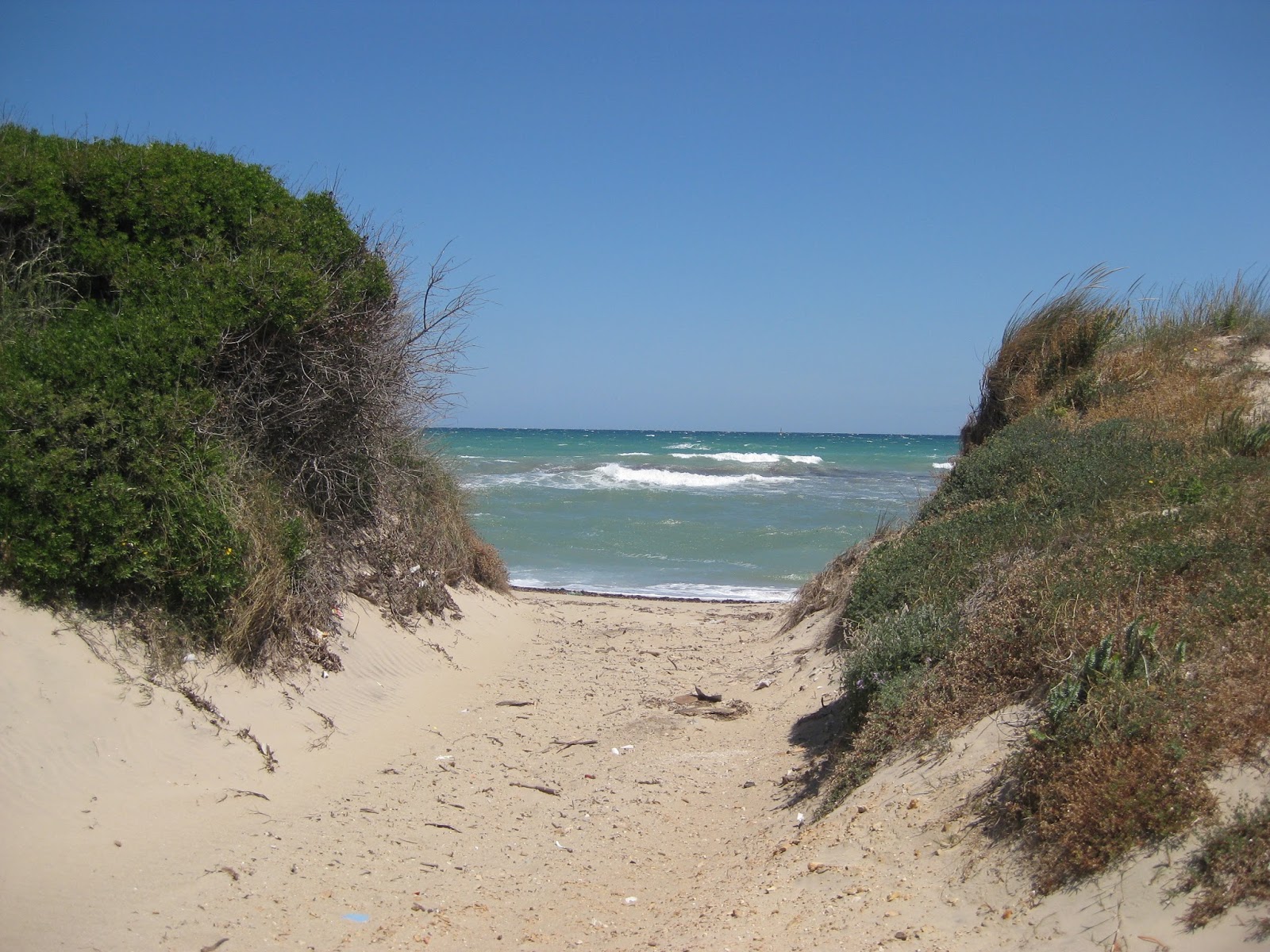
Well, the short answer is “Yes”.  I’ll share a few details of the trip next time, but meanwhile here are a few pictures.


*The E55 is the coastal near-motorway (I haven’t been able to discover what the E stands for, as Italian roads are officially A, S, R or P) which runs from Bari in the north to Lecce in the south, and hence will be much travelled by any motorised visitor to Puglia.

Friday, 30 August 2013

Movement towards …


Bee moved house today.  The plan was that she’d phone me in time for her to pick up the keys and get to the new place just as I and the removal people fetched up.  What could possibly go wrong?
She hadn’t allowed for her old neighbours, of course.  One by one, they drifted across, to say goodbye, or to offer a drink or a snack, or in one case to indulge a small child who just wanted to wander round an empty house.  You can’t say no, can you?

I missed all that, I’m glad to say, because I was parked outside the new place waiting for progress updates.  The removers were supposed to wait for a call, but they arrived before that.  I welcomed them and explained the situation.  This was a mega bluffing exercise, as at that moment I had no idea what the situation was.  It didn’t matter: “We got bored hanging around,” said the team leader, “so we thought we might as well come on up.”  I had no argument with that.
Once they got going, they were phenomenal.  Neither of us has moved house for many years, and we’d forgotten how strong and strenuous and motivated these guys are.  Everything had been carefully labelled, of course.  (She’s very organised, despite her denials.)  I had to prevent the work experience lad from putting the microwave into the attic, but apart from that, all that’s left to do is empty about twenty-five boxes of whatever the hell they might contain.  We’ll do that on Sunday.  The volume of stuff in boxes seems to exceed the volume of furniture by a factor of about seven; but most of it is wrapping paper, and air.

After they’d gone, we sat down and had a cup of tea, followed up by a gin and tonic.  She looked around.  “I’m going to like it here,” she said. 

One of my few guiding precepts in life is ‘Don’t move away from things, move towards them.”


Saturday, 18 May 2013

Five good things about where I live


This may be of specialised interest.

Reading regularly figures in top fifty lists of crap towns in Britain, and I can’t argue with that, not having visited, let alone lived in, most of the others.  I don’t want to go into the details of what constitutes a crap town (although I could, believe me), but I’ve been spending some time recently thinking about relocating, so here’s the case for the defence [*generalised: a couple of more personal items in the footnote]:

The Inner Distribution Road.  This bisects the town with an amalgam of  seventies concrete brutalism and upgraded ancient routes – sometimes briefly disappearing entirely – in order to, well, distribute inner traffic, I suppose.  The flyover by what’s now the Oracle was, I’m told, left uncompleted for a long time, earning it the nickname ‘The Ski Jump’.  This road has a unique feature: the sliproads are dual purpose, serving both for joining and for leaving the IDR.  Try and map that onto a motorway junction and you may get a feel for how this has contributed to Reading’s special style of driving.
Brickwork.  The old houses are built with local bricks (once made, confusingly, by the London Brick Company) in distinct shades of red and grey arranged in patterns, up the side of a wall, which to an amateur eye are random but in fact must conform to arcane rules, which have been known to hold up planning applications for years.  Anything that can achieve that, whilst also being beautiful, has to be kept and cherished.
Smelly Alley.  Union Street, to give it its official but never-used name.  it’s definitely an alley, not wide enough for two prams to pass, as I observed the other day on my way to Frost’s, the fishmongers, from which Smelly Alley gets its name.  I’d searched them to make sure they still existed – they certainly do, have a look.  I said “I’m making a bouillabaisse”, and walked out ten minutes later with monkfish, cod cheeks, giant prawns, mussels and clams.  When we’d eaten it, B and I had a conversation about localism.  “It’ll come around, eventually,” she thought.  If you agree, please seek out and buy from wonderful shops like Frost’s.
The Prom.  This is the gateway to the best walks in Reading, which are beside the Thames.  Turn left from the car park (still free, though the cash-strapped council are targeting that) and you’ll follow the wide river, full of canoes and cruisers and swans, past posh palaces on the other side, with their pergolas and turrets, and jetties, some possibly with green lights at the end.  Turn right and you’ll enter a confusing world of gasworks, confluences, brick bridge arches (constructed in the Reading style), and low-rise hitech offices on the widening horizon.  And a couple of good old run down riverfront pubs.
The Oxford Road.  (The ‘The’ is essential if you want Read-Cred.)  This is just down from where I live.  At my last count there were seventeen hairdressers/beauty parlours/tattoo joints.  I haven’t counted the halal butchers yet, nor the thriving charity shops or the community centres.  Willis and Shorts, the newsagents where I buy my paper, is a community centre.  There’s another one just across the road, jointly run by the council and the police.  What were we saying about localism? 

* Reading also contains at least two of my favourite bloggers (although one of them has, temporarily I hope, given up), and a lot of my good friends.

Thursday, 25 April 2013

More Island Notes


As it’s a slow blog day, a bit more on the Jersey trip, mostly about the hotel.

It’s called the Ommaroo, located on the coast road from St Helier to Gorey – just go up round the hairpins past Fort Regent, drop back down and it’s on the left, can’t miss it; though the car park is a bit harder to find, as I discovered three times. 

It can’t be on the right, because that’s the sea, or what passes for it here – a rather scruffy curve of beach with some anonymous industrial constructs to the far south.  Before these, you see an elliptical area, ringed by a  rather brutalist concrete wall, which fills with water at high tide.  There’s a rather charming blue and white art deco pier running out beside it.  Apparently this was (and possibly might still be) a swimming pool.  During the Occupation, it was the only location on the island at which German soldiers (officers mostly, one would guess), because they weren’t in uniform, could consort freely with local girls.  Afterwards, they might repair to the Ommaroo for entertainment.  None of the Jersey natives I speak to are able to confirm or deny this legend.

The inside of the hotel is multi-levelled.  Although there are notionally three (or possibly four, hard to say) floors, each of these contains many mini-floors, so that if you’re entering from, say, the car park (as we did, naturally), you will ascend and descend four flights of two or more steps before you reach the reception area.  The charming Polish receptionist will then cart your cases halfway back the way you came until he sends you off  in another direction (through the coffee lounge) whilst he hauls them up some stairs “because the lift isn’t strong enough.”  (Lord knows why – I’ve shown you the lift’s rules.)   The lift is just inside the door from the car park.

K. manages, with my guidance, not to fall up or down any of those steps (although she does succeed next day in tripping over the baby gate at the top of her grand-daughter’s stairs, whilst trying to evade their labradoodle, but that’s another story*.)

At breakfast next morning, the waiters present K. with a surprise – a birthday cake, which has been delivered by some relatives.  She’s overwhelmed, of course, and the waiters aren’t even slightly perturbed by finding that there aren’t any candles to light.  Some other guests (who turn out to share her surname) come over and sing Happy Birthday.

Later, I ask John the taxi, who’s from the Midlands but has lived here for thirty-five years, knows everything there is to know about the place, and doesn’t like it, why it’s called the Ommaroo.  “Nobody knows,” he says.

I believe him.

I think it's one of the most delightful hotels I've ever stayed in.  I have Somerset Maugham visions.


*By the way, anyone want to buy a labradoodle puppy sometime next autumn?

Tuesday, 17 April 2012

A303 Revisited

Just a turning off the M3 these days.  Should be a song, like Route 66.

Basingstoke.

Andover.

Thruxton.  Vroom vroom.

Quarley.

Amesbury.

Stonehenge.  Come over the hill and you almost miss it, until suddenly there it is on the skyline.  As you descend, so does it, and you see that it’s swarming with human ants, who are eating its heart.

Winterbourne Stoke.

Deptford.  Marlowe never came here, you think irrelevantly as you soar past the signpost.

Fonthill Bishop.

Zeals.

Gasper.

Wylye.

Chicklade.  An old joke about hens.

Mere.  Don’t stop there for lunch.  The only way out is via the carpark.

Wincanton.  Tankers full of milk.

Compton Fauncefoot.

Queen Camel.

Wales.

Kingsbury Episcopi.

Ilminster.  The strangest bypass in Britain.

And then it peters out, no ceremony, not even a place (the nearest is Upottery), just before Honiton, and turns into the A30.  Which is a whole other story.

Sunday, 19 February 2012

Just thinking ...

I’ve been thinking about relocating.  Sorry, that’s a weasel word – I mean going to live somewhere else.  Why?  Well, I’ve been here in Reading, in this house, now, longer than I’ve ever been in any other town or house; is that a sufficient reason to be restless?

(I don’t know the answer to that, but one of the joys of blogging is that you can chuck thoughts and ideas out of the window and, occasionally, they will get shaped, sanded down, and drop, provoked and  purified, back in through the letterbox, unsolicited but the converse of junk.)

As this town (which I like, a bit, and which contains a lot of people whom I like, a lot, but all that’s been factored in to this blogdream) is slap bang in the middle of southern England, and given that I miss the sea and the coast, I only really have four options:  north, south, east or west.  North is out of the question.  South would mean going back to where I was born.  East is a foreign country.  So that leaves West.

West consists of Wales and the West Country.  I don’t want to live in Wales, for reasons too difficult to explain here.  So that leaves the West Country.  This consists of Devon and Cornwall.  Devon is tempting, but it’s too expensive.  So I’m left with Cornwall.


I saw a documentary the other night which purported to be about the English countryside (it looked more like a remake of ‘Coast’, but .)  One of the places it covered was the far western tip of Cornwall, with some emphasis on the tin mining.  It didn’t, as I’d hoped, feature the strange, creepy landscape of Bottalack – the abandoned working buildings and routes – but it did remind me of St Just.

No-one knows just who St Just was, but that doesn’t prevent him or her giving the name to two Cornish towns within a long spit of each other.  I’m talking, of course, not about the one that’s called ‘St Just in Roseland’, but about the most westerly town in Great Britain.  I’ve only been there a few times, but here’s a snapshot…

We’ve walked to a pub which has a Thursday folk night.  About eleven musicians are crammed onto a stage big enough for three – in fact, that’s not true, you can’t tell where the stage ends and the audience begins.  They’re playing guitars, banjos, fiddles, bongos, beer glasses, and in some cases just their own hearty voices.  I hear a suggestion that I should get up there, grab a guitar and join in, and I’m tempted; but then someone moves in beside me.  I apologise (why?), make room and look.  It’s a tall blonde girl in a black leather trouser suit, carrying a banjo case.  ‘I’m a bit nervous’, she says, without smiling.  ‘Never been here before.’  I have no reply to that.  Her minder, who turns out maybe to be her father, whispers something to one of the musicians, who nods.  The girl unpacks her banjo and sits down on a hastily vacated chair.  ‘Duelling?’ I overhear her mutter to the other banjoist.

Yes, I want to live where that kind of thing happens.  Not every day, you understand – just sometimes.